
Memorable Domain: 7 Best Rules Including the Radio Test
You hear a brand name once, on a podcast or in a taxi, and later you try to find it online. A memorable domain makes that moment easy, while a forgettable one sends people to a competitor, a typo page, or nowhere at all. Your domain is often the first thing people see, say, and type, so it deserves more care than most founders give it. This guide covers seven practical rules, starting with the classic radio test. Together they help you choose a name that people can remember, spell, and trust, whether you are launching a shop, a blog, or a startup.
Many people treat the domain as a last-minute task. They pick a name they like, find it taken, and settle for a clumsy version with extra words, numbers, or odd spelling. That shortcut often costs more later. A weak name is harder to share in conversation, harder to put on a business card, and easier to confuse with another site. You can avoid most of these problems with a short checklist and an hour of honest testing. None of the rules below needs technical skill. They need patience, a few friends, and a willingness to drop a name you love when it fails the test.
Start With Domain Name Brainstorming Ideas, Not Availability
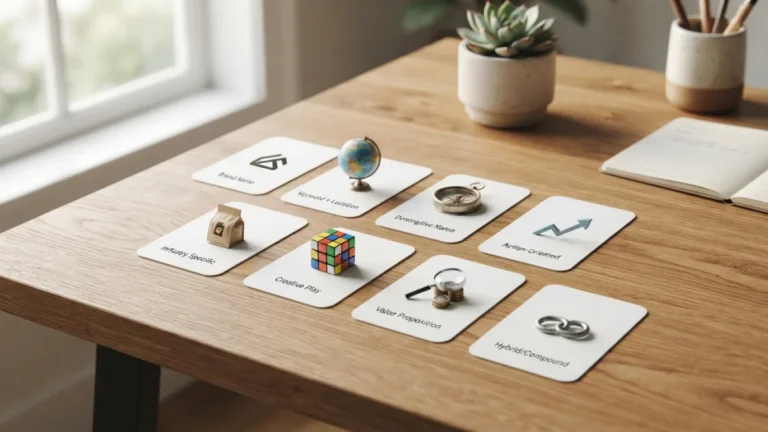
Good domain name brainstorming ideas start with meaning, not with what is still available. Before you open any search tool, write down what your site does, who it serves, and how you want people to feel. Then list words connected to those answers: actions, benefits, places, metaphors, even words from other languages that are easy to say. Aim for thirty or forty options, including bad ones. The weak names help you see what the strong ones have in common. Try combining two simple words, or take a familiar word and use it in a new context. Keep a shared document so your team can add ideas and vote. Only after you have a strong shortlist should you check whether the names exist. If you search too early, you tend to fall for whatever is free instead of whatever is best.
The 7 Rules for a Memorable Domain
Once you have a shortlist, run each name through the seven rules below. Do not expect every name to pass every rule perfectly. A short name that is hard to pronounce may be worse than a longer one that flows. Treat the rules as a scorecard, and look for the name with the fewest weak spots. If two names tie, choose the one you can explain to a stranger in five seconds. Write the scores down so the decision does not come down to whoever speaks loudest in a meeting. Here is the full list, and each rule gets its own section.
Rule 1: Pass the Radio Test
The radio test domain check is simple: if someone heard your name only once, out loud, could they find your website? The idea comes from radio advertising, where listeners cannot see anything on a screen. They hear the name, and that is all they get. If they would have to ask “how do you spell that?”, the name fails. Spelling is where most names break. Words like “kwik,” “xpress,” or “u” in place of “you” look clever in print, but they confuse people who only hear them. A name that passes the test needs no explanation, no spelling lesson, and no mention of “the one with the number seven in it.” It works in a podcast ad, a phone call, or a quick chat at a party.
You can run the test in a few minutes. Follow these steps:
- Say the domain aloud to three people who do not know your business.
- Ask each person to write down what they heard, without any hints.
- Compare their spelling with the real one.
- Wait a day, then ask them to recall the name from memory.
If two or more people get it wrong, change the name. A small spelling gap now becomes lost visitors later, and you will never see those visitors in your analytics, because they never arrive.
Rule 2: Choose Pronounceable Brand Names
Pronounceable brand names are easier to remember, easier to share, and easier to trust. People store names in their heads by sound, so a name that rolls off the tongue sticks better than a jumble of consonants. A good check is to read the name to someone who speaks a different first language. If they pronounce it the way you intended, you are in good shape. Watch for letter clusters that look fine on screen but sound awkward, and for words that change meaning in other languages. Natural rhythm helps too. Two syllables often work well, though three are fine if the flow is smooth. Avoid names that force people to guess where the stress goes. If your own team argues about how to say it, customers will, too.
Rule 3: Keep It Short
Short domain names are easier to type, easier to fit on a phone screen, and harder to get wrong. Every extra letter gives people another chance to make a typo. That said, short is not the same as good. A four-letter string with no meaning is harder to remember than a clear seven-letter word. A useful target is a name that people can hold in their head without effort, usually one or two simple words. Long phrases that describe your whole business tend to blur together and sound like everyone else. If your best idea runs long, try cutting a word, dropping a filler term, or choosing a stronger single noun. Then say it aloud again. Brevity should make the name clearer, not just smaller.
Rule 4: Skip Hyphens and Numbers
Domain name hyphens look like a neat fix when the plain version is taken, but they usually cause trouble. You cannot say a hyphen naturally, so you must explain it: “best, dash, coffee, dash, beans.” People forget the dashes, type the version without them, and land on someone else’s site. Hyphens can also make a brand feel like a second choice. Numbers carry a similar risk. Is it “4” or “four”? “2” or “to”? Every spoken mention creates doubt. If you have a business reason for a number, such as a street address or a founding year, make sure your audience already knows it. Otherwise, go back to your brainstorming list and look for a clean, plain name. It is better to pick a different word than to patch a good word with punctuation.
Rule 5: Pick From the Best Domain Extensions
The best domain extensions are the ones your audience expects and trusts. For most global businesses, that still means .com, because people often type it by default. Country extensions can work well when you serve one market, and newer options may suit a clear niche, such as a creative studio or a tech project. The danger is a quirky ending that people forget or mistype. If you use a less common one, test it in the radio test above, since listeners may add “.com” out of habit. You can read how these endings are organized in this Wikipedia overview of top-level domains, and learn about the group that coordinates the system at ICANN. Choose the ending that matches your reach, not the one that is merely cheap.
Rule 6: Run a Trademark Check
A domain trademark check protects you from building a brand you may later have to abandon. Owning a domain does not give you the right to use that name in business. If another company holds a similar trademark in your field, you could face a legal complaint, a forced handover, or a costly rebrand. Start by searching the official database in your country. In the United States, that means the United States Patent and Trademark Office, and other countries run their own registries. Look for exact matches and for names that sound or look alike. Also search the name in plain web results and on social media. This guide cannot replace legal advice, so if you plan a serious business, talk to a trademark lawyer before you commit.
Rule 7: Confirm Availability Everywhere That Matters
Use a domain availability checker only after your name has survived the first six rules. Type in your top choices, and note which are free, taken, or for sale. If your first pick is taken, do not grab a messy variation. Go back to the shortlist instead. Then widen the search beyond the domain itself. Check whether the same name is free on the social platforms your audience uses, because a consistent handle makes you easier to find. Look for near matches, too, such as plural forms or common misspellings, which a competitor could own. If someone else uses a similar name, ask whether customers could confuse the two of you. When a name clears every check, register it quickly, and consider adding common typo versions that point to your main site.
Putting a Memorable Domain to Work
The seven rules work best as a filter, not a formula. Brainstorm widely, say each name aloud, cut anything awkward, and test the finalists on real people. A name that sounds clear, looks clean, avoids legal trouble, and is still available is rare, so treat it as an asset. Once you register it, use it everywhere: on your website, email, social profiles, packaging, and spoken introductions. Repetition does the rest of the work. Even the best name needs consistent use before it sticks in people’s minds. Take your time with this choice, because changing a domain later means losing links, confusing customers, and starting some of your hard work over.
FAQ: The Radio Test and Memorable Domains
What is the radio test for a domain name?
It is a simple check: say your domain out loud to someone who has never seen it, then ask them to write it down. If they spell it correctly without help, the name passes. If they ask questions or guess wrong, the name is too hard to share by voice.
How long should a memorable domain be?
There is no perfect number. Aim for a name people can hold in their head easily, usually one or two simple words. Shorter helps with typing, but clarity matters more than length. A clear longer name beats a short, confusing one.
Are hyphens and numbers bad in a domain name?
They often cause problems. People forget hyphens, and spoken names with numbers raise questions about whether to use digits or words. Both can send visitors to the wrong site. Use them only if your audience already knows exactly how they work.
Is .com still the best choice?
For many global brands, yes, because people often type it automatically. Country or niche endings can work if they match your audience and you test them with real users. Avoid unusual endings that people may forget or mistype.
Do I need a trademark check before buying a domain?
You should do one. Buying a domain does not give you trademark rights, and a similar registered mark in your field could cause legal trouble. Search your national trademark office, and ask a lawyer for help if the business is important to you.

Ghani Mejber — Founder & Lead Editor
Ghani Mejber is a domain name investor, branding consultant, and the founder of Mejber.com, where he curates premium brandable domain names and shares practical insights on domain valuation, acquisition, and portfolio strategy.